
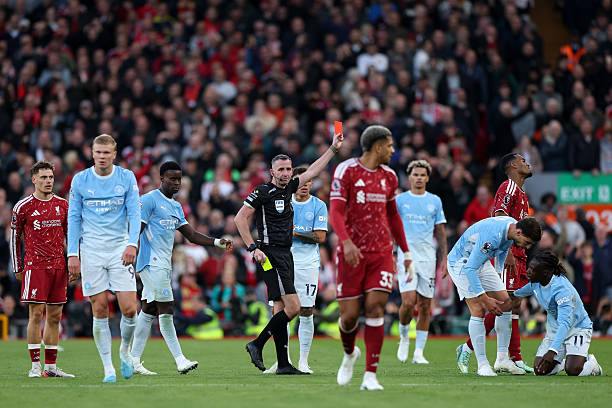
Liverpool’s defeat to Manchester City has once again raised questions about Premier League refereeing, with Gravenberch’s red card becoming the defining moment of the match. The decision changed the game, leaving Andoni Iraola’s side with a difficult tactical challenge against one of the strongest teams in the league.
 Liverpool had competed well before the dismissal, pressing aggressively, winning duels and looking to exploit the space behind City’s defensive line. Once reduced to ten men, however, the team struggled to maintain that approach, allowing City to take control. Iraola will need to learn from how his side responded, but the circumstances of the defeat deserve scrutiny too.
The controversy goes beyond one decision. Liverpool supporters questioned the consistency of the referee’s disciplinary decisions, pointing to incidents they felt were treated differently. When similar challenges appear to receive different punishments, it inevitably creates frustration and suspicion.
That does not prove corruption. But it does raise a wider question about how refereeing standards are monitored and whether the current system does enough to maintain public confidence.
There is also a broader issue of accountability in English football. Manchester City’s financial case has kept questions about the enforcement of Premier League rules in the spotlight, while controversial refereeing decisions continue to fuel debate about fairness on the pitch. These are separate matters, and there is no evidence that they are connected. Nevertheless, both underline the importance of transparent processes and consistent standards.

Liverpool cannot escape responsibility for their own performance. The team needed to adapt more effectively after the red card, and the coaching staff must prepare for situations in which a match suddenly changes. But accepting those shortcomings does not mean supporters should stop questioning the officiating.
Referees make mistakes, and not every controversial decision points to deliberate wrongdoing. Yet the authorities should understand that repeated disputes over consistency can erode trust, particularly when explanations are limited or difficult for supporters to understand.
An independent review of refereeing standards, appointments, disciplinary decisions and VAR procedures would help establish whether there are systemic problems that need addressing. It should examine the evidence objectively, distinguish honest mistakes from structural failures and investigate any credible indication of deliberate misconduct.
The aim should not be to prove a conspiracy. It should be to establish whether the system is working as it should, and what needs to change if it is not.
Corruption can exist in any institution, which is precisely why transparency and independent oversight matter. No organisation should be above scrutiny, and no serious allegation should be treated as proven without evidence.
Liverpool will have to move on from this defeat and focus on the next match. But the wider questions surrounding refereeing will remain until supporters can see that decisions are being made consistently, potential conflicts are handled transparently, and mistakes lead to meaningful accountability.
Fairness in football cannot simply be assumed. It has to be demonstrated, on the pitch and by the institutions responsible for governing the game.